HR process · Lean
Using Kanban to Improve Performance Evaluations
From gridlock to “go”, how applying lean manufacturing techniques to an HR process helps performance evaluations start moving again.
The problem
An organization’s annual performance evaluation process is a constant source of pain and frustration for managers and team members.
- An evaluation may take months to complete, being out of date before it’s delivered.
- Manager-to-manager process variations allow unwanted people bias.
- Manager workload becomes unbearable as they try to manage normal day-to-day operations.
- Hand-offs between cross-functional teams (Ops, HR, Finance) caused collisions and lost or missing paperwork.
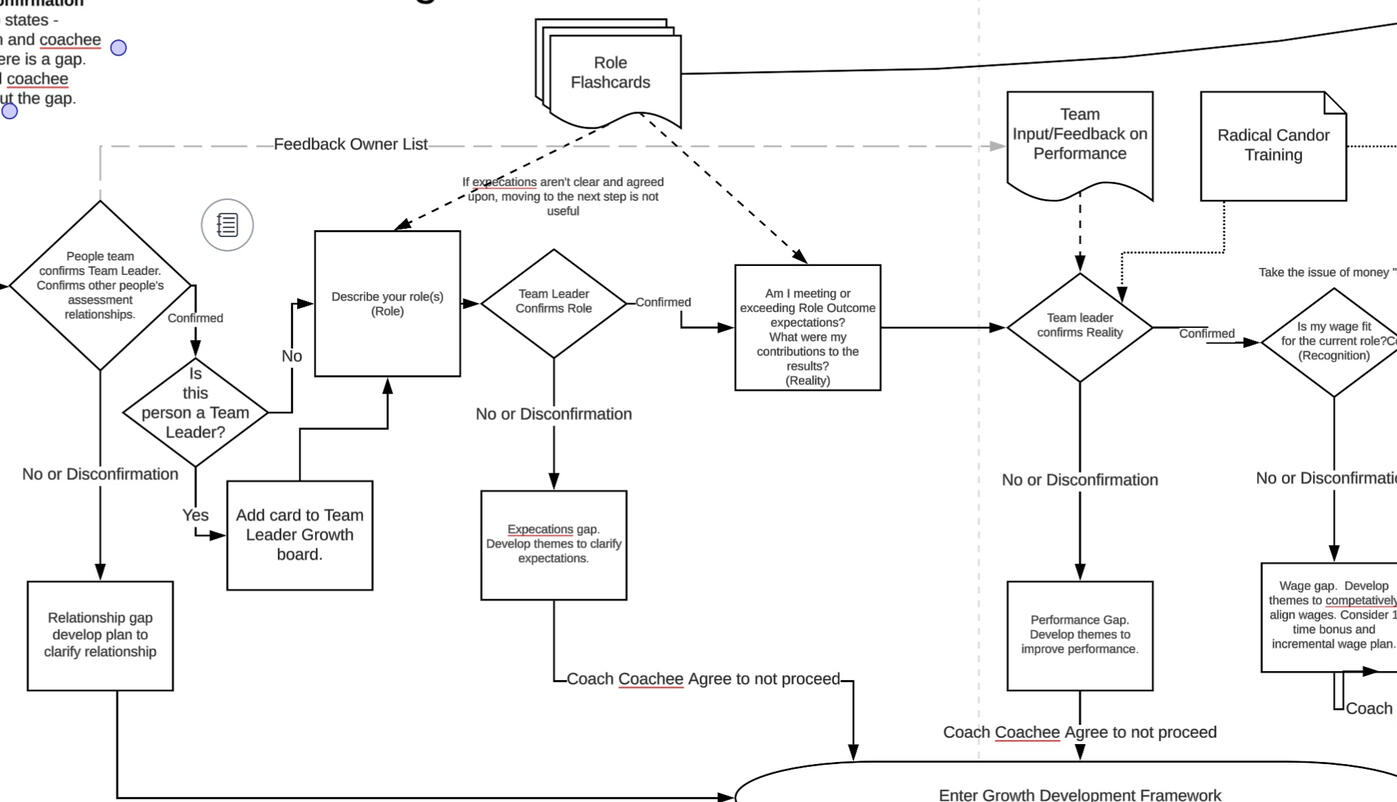
Mapping the process
Over the years, many “improvements” had been made to the evaluation process, but as Eliyahu M. Goldratt explains in The Goal, any improvement made away from the bottleneck is not a real improvement. To create lasting change, we needed to visualize the intended process and identify the true bottleneck.
After several days of mapping and drawing, the team began to see the gaps between the intended process and how it was actually operating.
By creating a clear future-state process map, we established the standard for what we aimed to achieve. We could now truly run the process in a controlled manner, allowing bottlenecks to emerge.
Exposing a problem on the first cycle
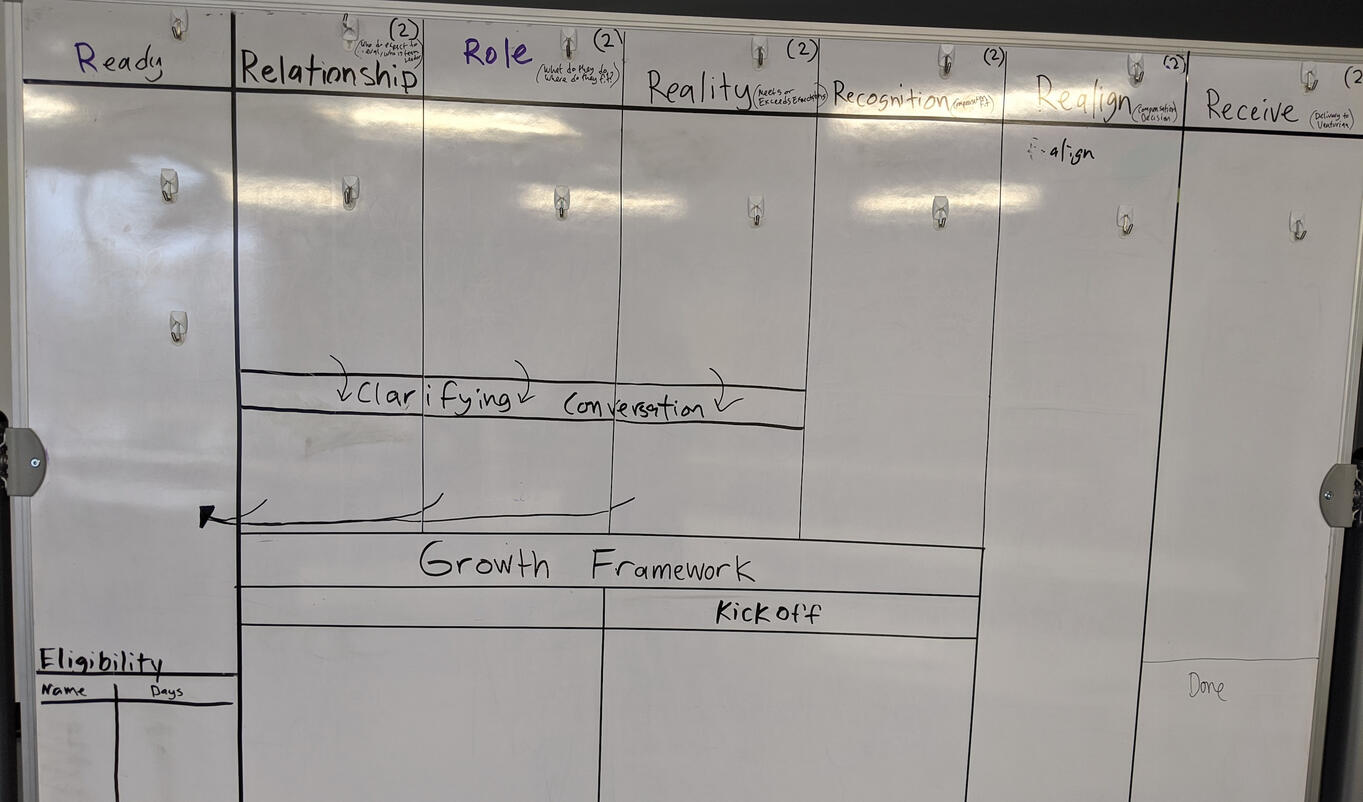
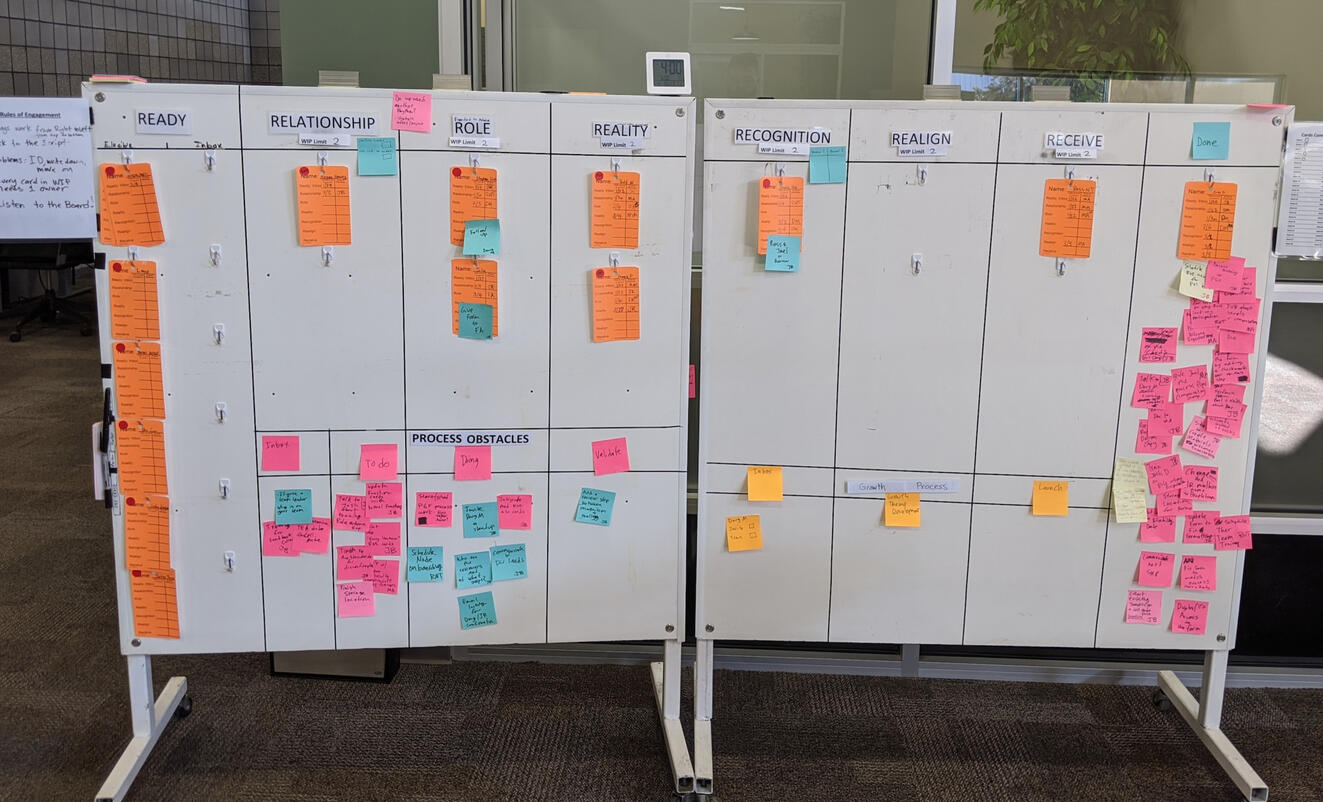
Using Lean techniques like demand leveling and visual management, we built a Kanban board with lane-level WIP limits and defined a standardized work approach. It didn’t take long for the first issue to surface.
On kick-off day, as the team gathered around the board, our very first card became blocked in the initial lane. The team member wasn’t sure about their manager alignment and couldn’t complete the self-evaluation form. That moment revealed our first real problem.
Locking in improvements
Cycle after cycle, we found bottlenecks, blockers and improvement ideas. Cycle after cycle, we updated our Kanban board, adjusted our standardized work, and applied our new process to the very next evaluation.
No need to wait until next year to try and improve, or re-train our managers. We were able to immediately benefit from our lessons learned the very next day.
Going digital
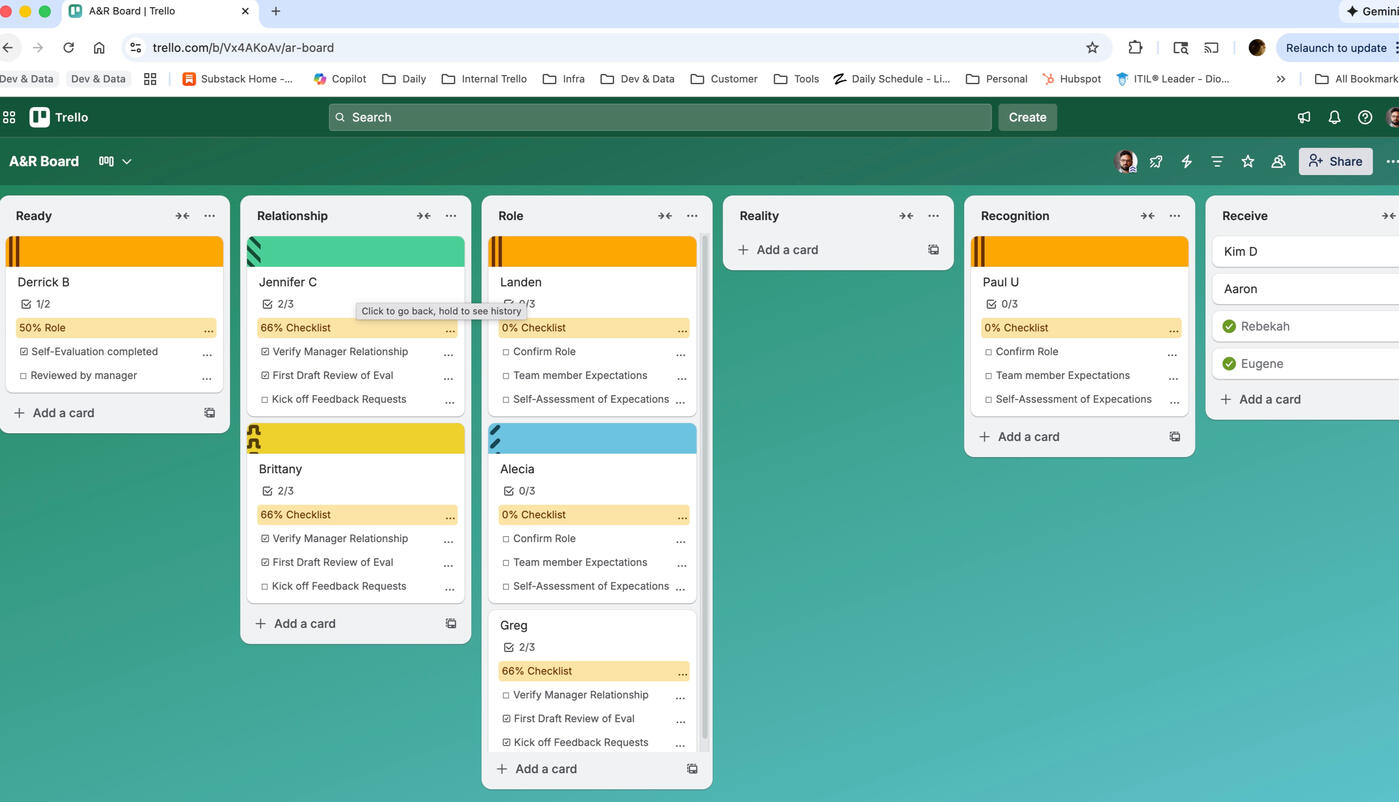
After multiple improvement cycles, we were ready to build a system that our hybrid, geographically distributed workforce could use. By combining Cognito Forms, MS Power Apps, Trello, and O365, we created a visual tool that leveraged digital forms, checklists, and automations. This flexible stack made it easy to keep refining the process, cycle after cycle.